
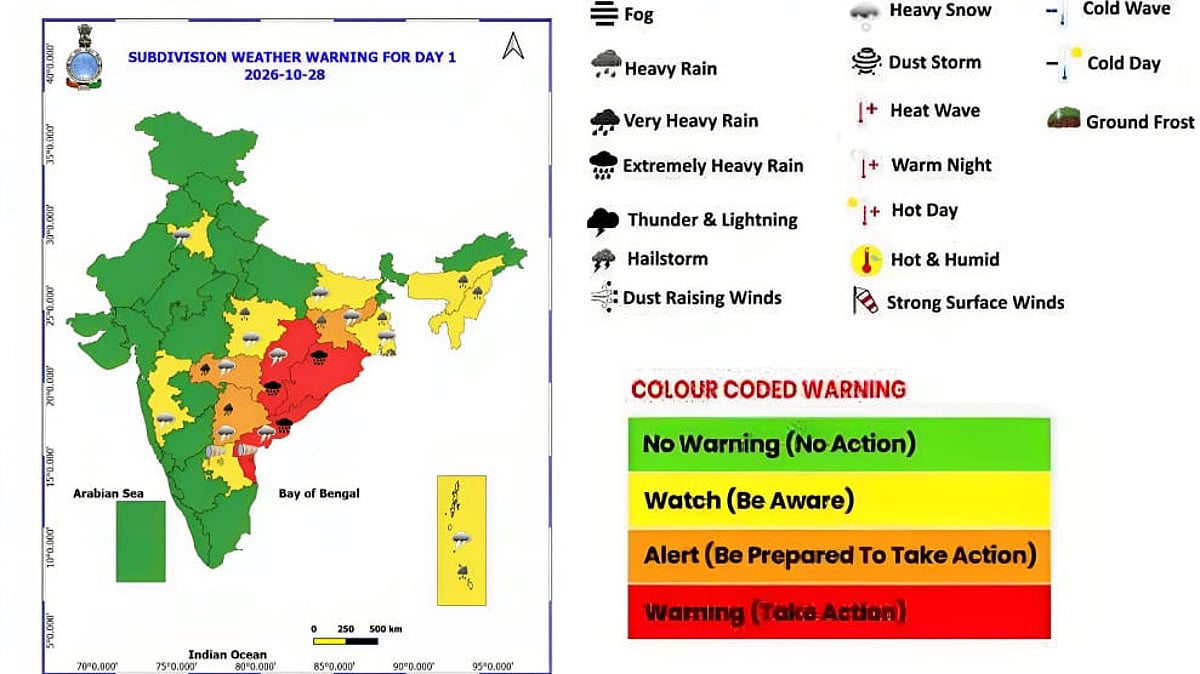
Cyclone Arnab, a low‑pressure system moving toward the Bay of Bengal, is projected to bring heavy rainfall to the coastal districts of West Bengal.
Key Developments
- Meteorological estimates indicate that the cyclone could deliver sustained heavy rain to districts such as North 24 Parganas, South 24 Parganas, and the Sundarbans region.
- The storm’s trajectory places low‑lying coastal areas at higher risk of surface flooding and river swelling.
- No official evacuation orders have yet been issued, but authorities are urging residents to stay informed.
Background & Context
Cyclones that approach the West Bengal coast frequently bring heavy rain and strong winds. Historically, such storms have led to flash flooding, damage to mangrove ecosystems, and disruptions in local transport.
Impact & Analysis
- Flood Risk: Heavy rain may raise water levels in the Hooghly and lower Ganges rivers, threatening nearby villages.
- Infrastructure: Roads and bridges in flood‑prone areas could be damaged, affecting daily commutes and supply routes.
- Agriculture: Paddy fields and aquaculture farms may suffer from waterlogging, impacting local livelihoods.
What Happens Next
Local government offices and the Indian Meteorological Department will continue monitoring the cyclone’s progress. Residents should check official alerts, secure property, and maintain readiness for possible evacuations if conditions worsen.