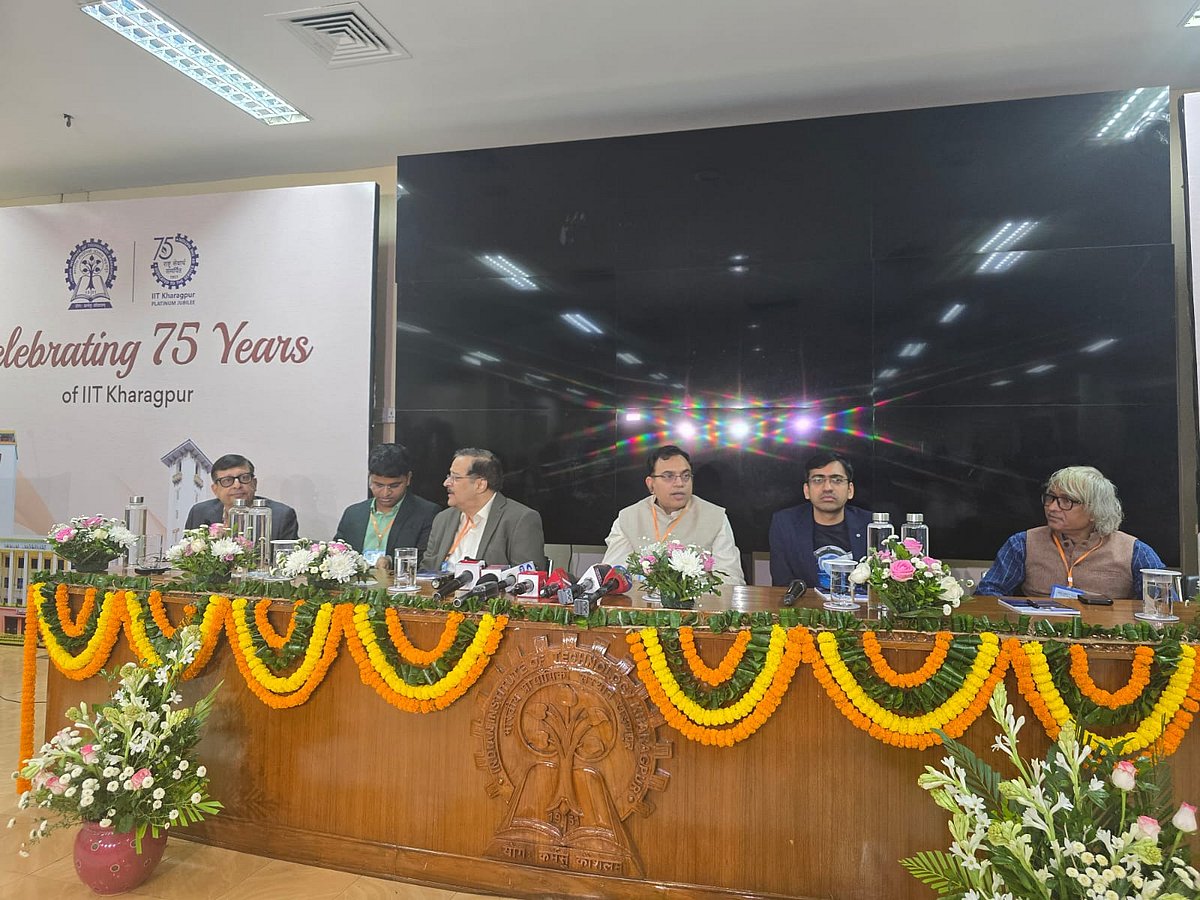
IIT Kharagpur has announced a series of initiatives designed to empower women health workers in the rural districts of South Bengal. The institute aims to enhance its contribution to addressing societal challenges by leveraging technology and innovation. Prof Suman Chakraborty, the Director of IIT Kharagpur, made the announcement during a press conference held in connection with Prime Minister Narendra Modi's participation in the institute's Platinum Jubilee celebrations.
During the event, Prof Chakraborty noted that the Prime Minister suggested introducing an AI-based aptitude certificate app. This tool is intended to help identify children's interests and aptitudes at an early age, thereby guiding them toward their preferred fields of study in the future. The Director also highlighted the Prime Minister's emphasis on the 'TB Mukt Bharat' and 'Anaemia Mukt Bharat' missions, along with the goals of self-reliance in the technology sector and increased public participation in defence and space initiatives.
Referring to the rise of start-ups like Skyroot Aerospace, Prof Chakraborty underscored the growing role of private participation in India's technological development. He stated that "Nation First" remains the guiding motto of IIT Kharagpur and noted that the Prime Minister encouraged technology-based start-ups to expand their innovations to help citizens realize the vision of Viksit Bharat by 2047. Additionally, the Director mentioned that the institute is expanding its initiatives in medical education and teaching.
Dr Subrata Gupta, a retired IAS officer and Chief Advisor to the Government of West Bengal, also addressed the gathering. As an alumnus of IIT Kharagpur, Gupta highlighted employment generation as a key priority for the state government, noting that start-ups and the services sector are emerging as important focus areas for economic growth. He described the services sector as a key avenue for vertical development and pointed to IIT Kharagpur's contributions to maintaining critical infrastructure in the state, including roles in transport planning and design to address traffic-related challenges.