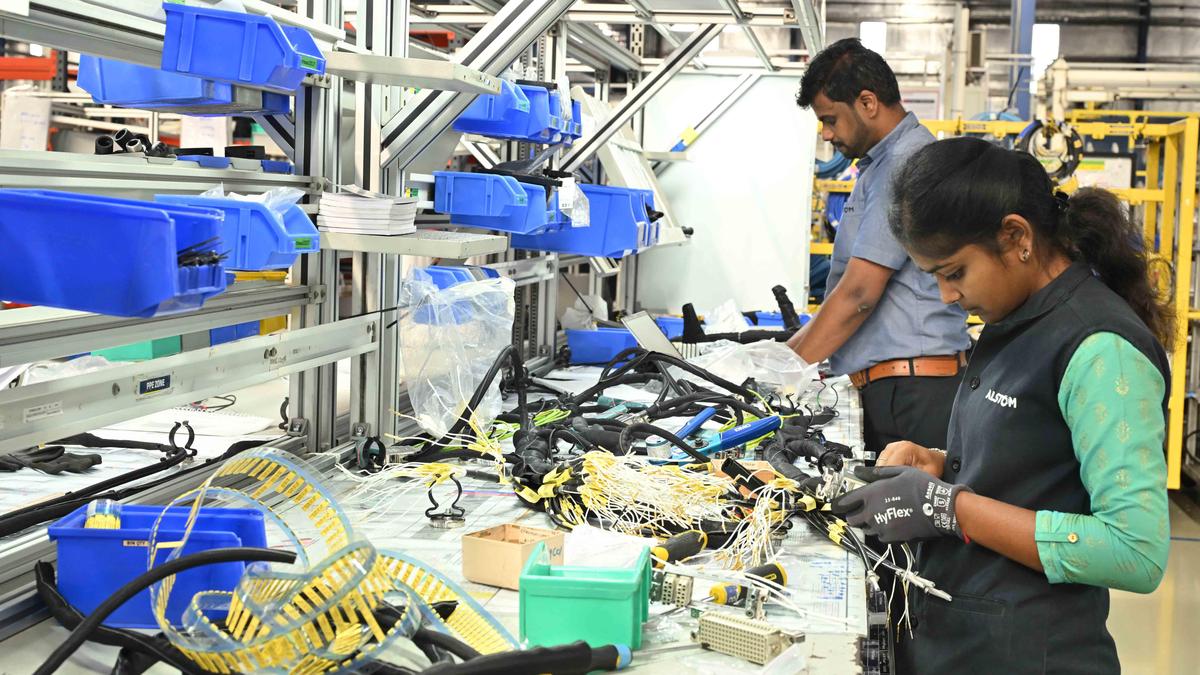
The national accounts statistic for 2023‑24 shows India’s manufacturing sector contributing ₹38.6 lakh crore to Gross Value Added (GVA) at current prices. However, an alternative estimate derived from the Annual Survey of Industries (ASI) and the Annual Survey of Unincorporated Sector Enterprises (ASUSE) yields a markedly lower figure, prompting analysts to question the reliability and methodology of the official data.
Key Developments
- Official figure: ₹38.6 lakh crore GVA for manufacturing (2023‑24) as per National Accounts Statistics.
- Alternative estimate: Lower than the official number, calculated using ASI and ASUSE data.
- Reactions: Economic analysts and industry bodies are calling for a review of the data collection and aggregation processes.
Background & Context
The National Accounts Statistics compile data from various sources, including company filings and government surveys, to estimate sectoral GVA. The ASI surveys individual firms, while ASUSE covers unincorporated enterprises such as small workshops and self-employed units. Disparities between these sources can arise due to differences in coverage, reporting frequency, and valuation methods.
Impact & Analysis
- Policy implications: A lower GVA estimate may influence central and state fiscal allocations, affecting subsidies and infrastructure funding.
- West Bengal’s industry: The state’s manufacturing output, heavily concentrated in sectors like textiles, chemicals, and engineering, could see revised growth projections.
- Investor confidence: Inconsistent data may deter investment or alter the perception of West Bengal’s industrial health.
- Budget planning: State authorities may need to adjust budgets for public works and skill development initiatives.
What Happens Next
- Data audit: The Ministry of Statistics and Programme Implementation may conduct a comprehensive audit of the methodologies used in both the national accounts and industry surveys.
- Stakeholder consultations: The government is expected to engage with industry associations to reconcile differences.
- Updated releases: Revised estimates could be published in the next quarterly economic review or the year‑end accounts.
By addressing the gap, policymakers aim to ensure that West Bengal’s manufacturing sector receives accurate representation in national statistics, thereby supporting informed decision‑making and sustained industrial growth.