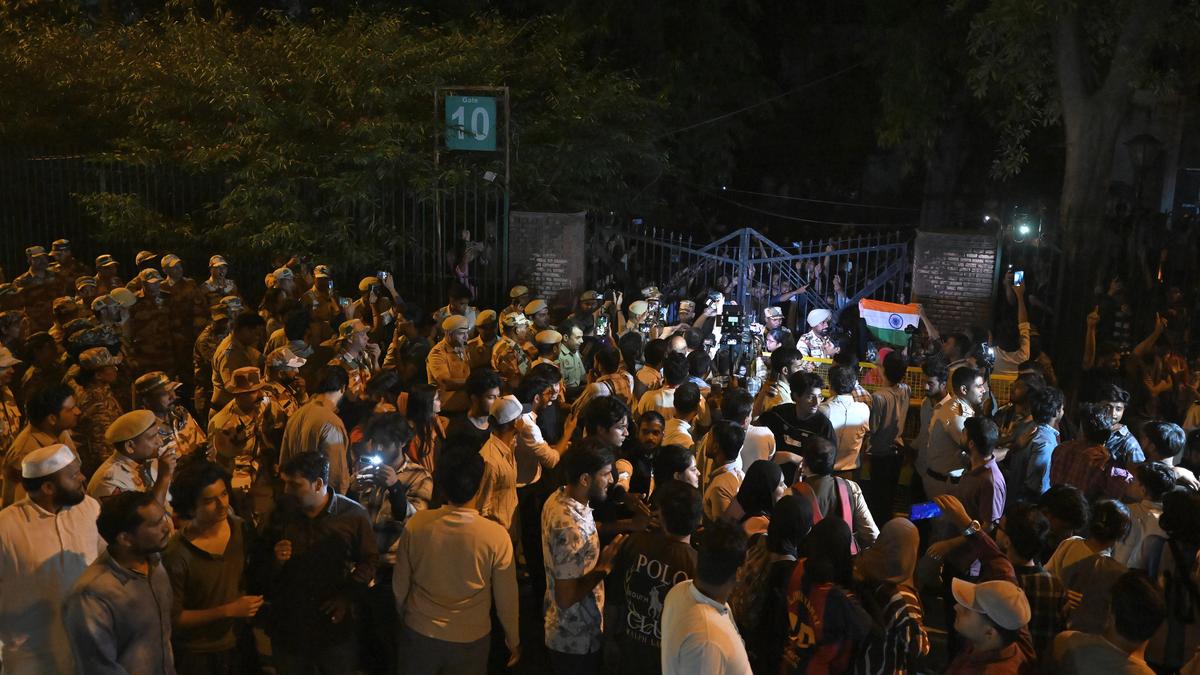
Overview
The protest at Jamia Millia Islamia University in Delhi has entered a heightened phase. University authorities have suspended all classes, cut off water services on campus, and barred students, staff, and visitors from entering or leaving the premises. Police forces have been deployed in large numbers to maintain order and enforce the restrictions.
Key Developments
- Classes at Jamia have been halted for the duration of the protest.
- Water facilities across the campus have been shut down.
- No movement is allowed; entry and exit points have been sealed.
- A considerable police contingent is stationed around the university to manage the situation.
Background & Context
Jamia Millia Islamia University, one of India’s prominent public institutions, has recently faced unrest due to a combination of student demands and broader national political tensions. The university’s administration has responded by imposing strict measures to curb the spread of disorder.
Impact & Analysis
- Academic Disruption: Students are unable to attend classes, affecting coursework and examinations.
- Infrastructure Strain: Cutting water supplies may affect campus facilities and sanitation.
- Security Concerns: The heavy police presence signals a serious escalation and could deter normal campus activities.
- Economic Effects: Local vendors and nearby businesses may suffer from reduced footfall.
- Student Sentiment: Prolonged restrictions could intensify grievances among the student body.
What Happens Next
The university and law‑enforcement agencies are monitoring the situation closely. A review of the restrictions is expected within the next 48 hours, and potential negotiations between student representatives and authorities may be initiated if the situation remains unresolved. West Bengal students and stakeholders will likely receive updates through official university channels and local media outlets.