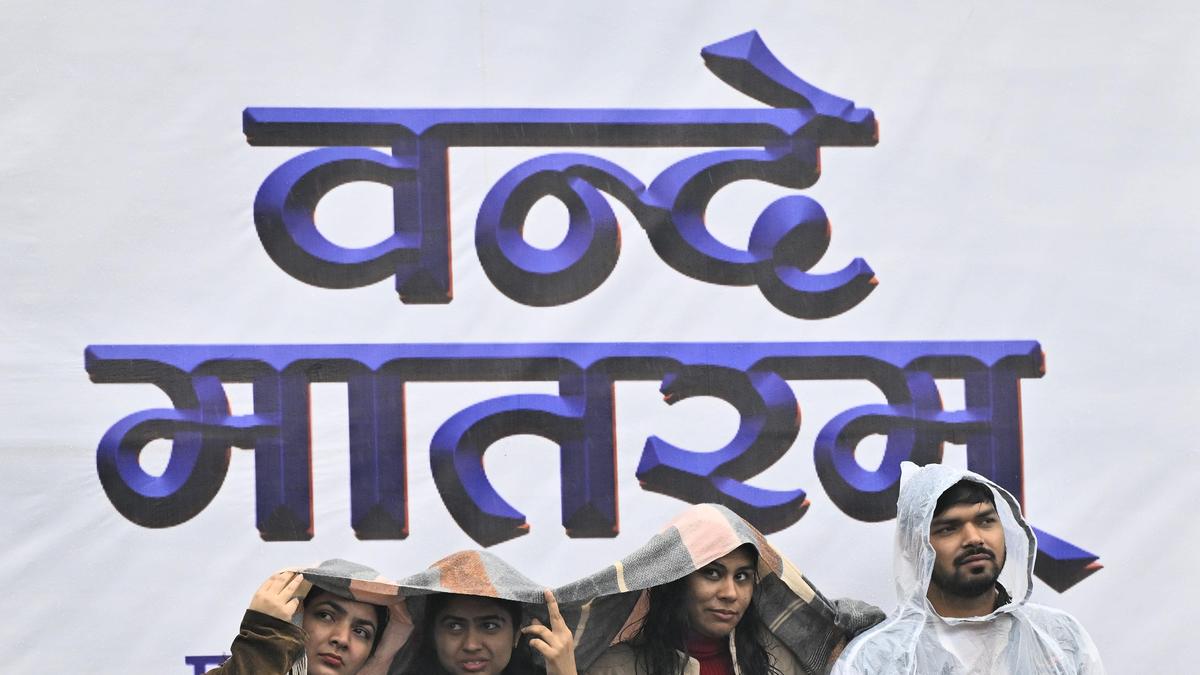
The Supreme Court has requested the central government to provide a response to petitions that challenge the status of Vande Mataram as a national anthem, alleging it is a divisive religious war song.
Key Developments
The petitions argue that government orders have designated Vande Mataram as the National Song, effectively imposing a sectarian prayer that honors particular goddesses of one religion. According to the petitioners, this designation infringes on fundamental rights to freedom of religion and may contravene criminal law provisions that protect against hate speech and religious discrimination.
Background & Context
Vande Mataram, originally penned by Bankim Chandra Chattopadhyay, has long been celebrated as India’s national anthem. However, its lyrics contain references to Hindu deities, which has led to periodic debates about its inclusivity. In West Bengal, the anthem’s religious undertones have sparked discussions on secularism, especially in a state with a diverse religious demographic.
Impact & Analysis
- Religious Freedom: The petition raises concerns about the protection of minority religious rights in India.
- Cultural Identity: The debate may influence how cultural symbols are perceived in a pluralistic society.
- Legal Precedent: A Supreme Court ruling could set a precedent for how national symbols are evaluated under constitutional law.
- Public Discourse: The case is likely to galvanize civil society, academic circles, and political parties to reassess the role of religious references in national symbols.
What Happens Next
The Supreme Court will consider the government’s response and may schedule a hearing to further examine the petitions. The outcome could influence future legislation on national symbols and religious freedom. Updates are expected as the court progresses with its review.