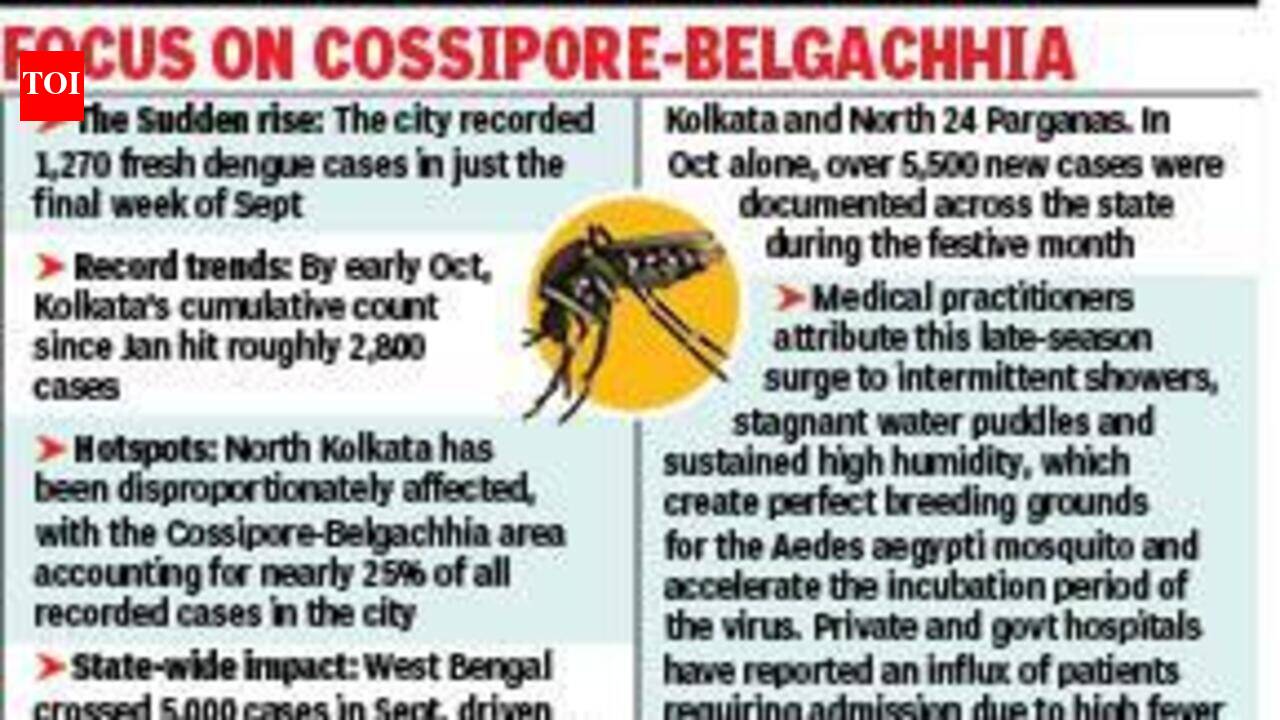
In an alarming turn of events, West Bengal recorded a late‑season surge in dengue fever, with 5,500 new cases reported in October alone. The spike comes after a tally of close to 3,000 cases in Kolkata since the start of the year, prompting the state health minister to convene a meeting today to discuss containment measures.
Key Developments
- October saw the highest number of dengue admissions in West Bengal this year, totaling 5,500 new cases.
- Kolkata accounted for almost 3,000 of those cases since January, underscoring the city’s vulnerability.
- The state health ministry has scheduled a dedicated meeting, chaired by the health minister, to review the situation and outline next steps.
Background & Context
Dengue fever is a mosquito‑borne viral infection that typically peaks during the monsoon and post‑monsoon months. The 2023 season saw a gradual rise in cases across the state, with the eastern districts reporting higher numbers. Early warning signs in July and August prompted increased vector‑control activities, yet the October surge indicates that the virus persists in the environment.
Impact & Analysis
- Healthcare strain: Hospitals in Kolkata and surrounding districts report increased admissions, stretching bed capacity and medical supplies.
- Public health concerns: The late‑season spike raises the risk of secondary outbreaks, especially in densely populated slum areas.
- Economic effect: Workers affected by dengue may miss critical workdays, impacting local businesses and productivity.
What Happens Next
The health minister will lead a high‑level meeting with district health officials, the police, and NGOs to:
- Strengthen surveillance and early‑warning systems.
- Intensify vector‑control operations, including fogging and source reduction.
- Coordinate public awareness campaigns on personal protection and early symptom reporting.
- Review resource allocation for medical supplies and treatment facilities.
The meeting’s outcomes will be shared with the public in a subsequent press release.